Before You Choose an App Development Company: Four Questions to Filter High-Risk Vendors

1. Filter before you compare price
Search App development company or mobile app development and you get a long list of teams that all “build apps”: similar case shots, similar stack buzzwords, quotes that differ by multiples. Many teams get stuck comparing only total price and timeline—then mid-build they hit scope blow-ups, accounts they cannot reclaim, and no one owning post-launch. That is hidden engineering tax, not the line item on the first quote.
If delivery and budget pressure also come from hype cycles, the framing in From Labubu to the Next Hit: Delivery and Cost Are the Bottleneck still applies—leave room at vendor selection, not only at launch.
This article compresses four questions aimed at app development services procurement: scope and acceptance, asset and account ownership, post-launch responsibility, change and ongoing cost. If answers are vague or boil down to “trust us,” raise your bar on contract terms—or talk to someone else. For total-cost framing across build models, see Build In-House vs Outsource vs Pro Team.
2. Why four questions, not a fifty-line RFP
The four cover: what shipped looks like, who owns what, who carries risk after launch, how money and change flow. They map to the blank spots contracts often leave—and the topics that cause the most arguments later. A longer RFP without these four can still fail in execution.
This is not legal due diligence or a stack bake-off; it is an Insight-level screen: memorable questions to drop obvious high-risk vendors before you commit. For phase thinking, see The Full AI Project Flow: From Requirements to Launch.
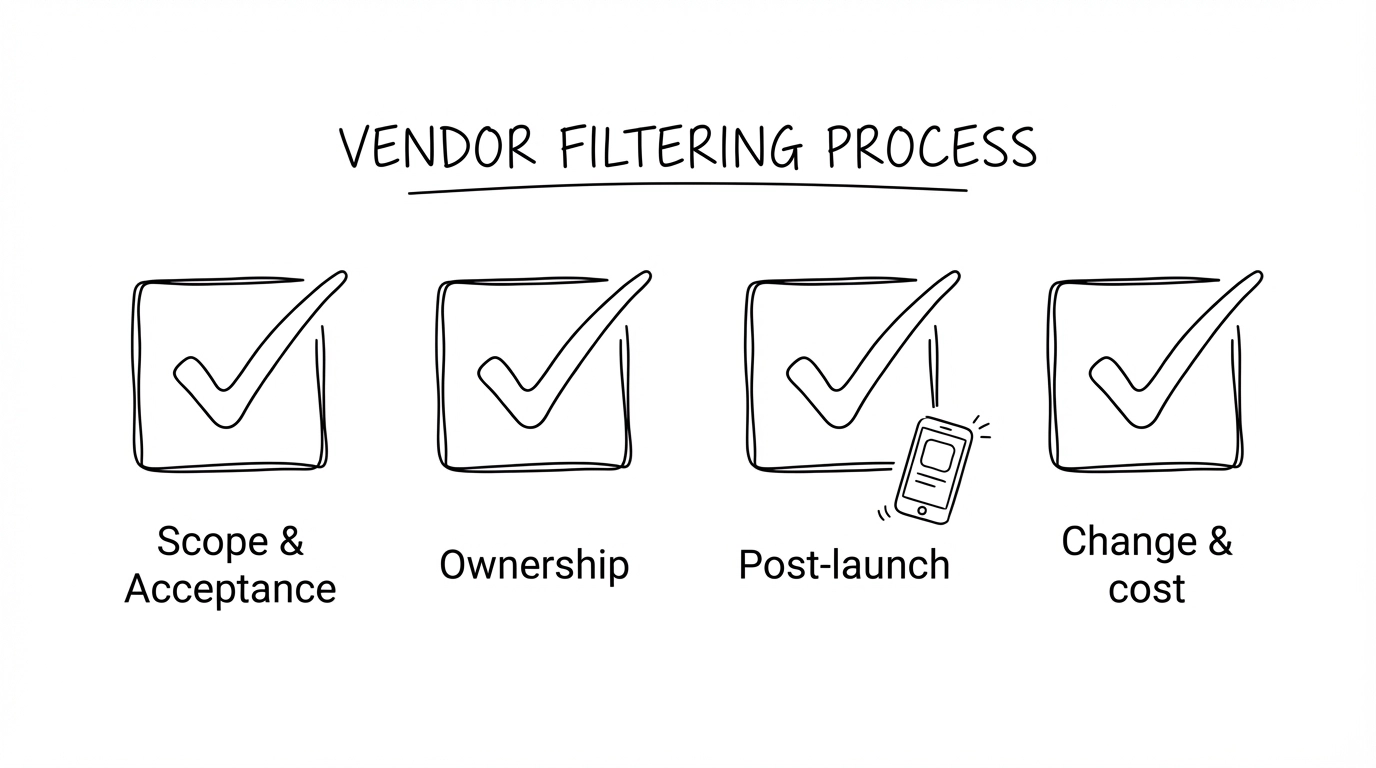 Figure 1: Ask four hard questions early in vendor selection—before price-only comparison lets hidden cost through.
3. Question 1: Can phase-one deliverables and acceptance fit on one page?
You want to hear: at minimum—concrete artifacts at the end of phase one (e.g. TestFlight build, Android internal build, core flows working), who can sign acceptance, and what happens if bars are not met (iterate, schedule, or commercial consequence). The context here is pre-signing vendor screening, not patching rules mid-project. Ideally a one-pager: milestone ↔ deliverable ↔ acceptance.
Watch out: only “MVP in three months” and a total, with no checklist; or acceptance defined as “when you’re happy”—same family as alignment issues in 5 Pitfalls When Using AI for Projects, just earlier in vendor selection.
4. Question 2: Who owns the repo, store accounts, certs, and keys?
You want to hear: source under your org (or migration date and format in contract); handover list for Apple/Google developer accounts, push certs, signing keys; if they host accounts first, path and deadline to move under your control.
Watch out: everything under their company or personal accounts with no handover clause—classic vendor lock-in and “pay more for the repo” disputes later. For Web3-heavy apps, key custody differs; the handoff mindset in Uranus Lab Web3 Delivery: From Requirements to Mainnet is a useful parallel (on-chain detail not expanded here).
5. Question 3: After launch, how are defects triaged, who responds, for how long?
You want to hear: definitions for severity, response and fix targets for critical issues, boundary for minor/UX polish, whether store rejection rework is in scope or how it is priced, warranty length, and what happens after.
Watch out: “three months free maintenance” with no severities or exclusions, or “done at launch”—pairs with signals in 5 Early Warning Signs of Low-Quality Delivery, earlier in the lifecycle.
Ask once and log in writing whether store policy or OS upgrades (e.g. new iOS behavior) fall inside maintenance—avoid discovering next year that “not covered.”
6. Question 4: How are changes priced? Who pays for push, store fees, third-party SDKs?
You want to hear: change workflow (ticket/CR), how estimates are approved; Firebase, maps, analytics, payments—who holds the account and pays; whether store annual fees and push quotas are broken out or buried in “all-inclusive” quotes that surface at year-end.
Watch out: “we’ll figure it out later”—common path to dual loss of budget and trust in mobile app development. For predictable engagement boundaries (not a price comparison table), see Why Flat Monthly Fee Engineering Fits Growing Teams.
7. Closing
In short: when choosing an app development company, four questions target acceptance, assets, post-launch duty, change and run cost. Weak answers often mean later tax was never in your model.
Want a quick pass on vendor answers or an RFP draft? Book a 30-minute Discovery Call. If predictable sprints and pricing matter more, see plans and pricing.
Want to run projects with AI and skip the trial-and-error? Uranus Lab wires multiple tools along requirements → docs → development → retro, with people and AI working together for smooth, fast delivery. Learn more or book a discovery call / get a free quote.
Ready to Build?
Stop building AI wrappers. Build defensible IP with a dedicated engineering pod.