After AI Dev Tools Hit the PO: Four Questions for Procurement and Engineering

1. Cursor / ChatGPT Team finally made the PO—then what?
Gen AI and coding assistants only recently graduated from pilots to formal POs—often within the last budget cycle or two—but the shift has been fast: many orgs already line-item AI dev tools on a purchase order: seats, annual fees, compliance. Externally that reads as investing in AI software development; internally, if “budget approved = capability delivered”, the usual next act isn’t a productivity spike—it’s tension: engineering says procurement doesn’t get shipping; procurement says engineering won’t define ROI; finance asks what the last renewal actually bought. That’s rarely “bad tools”; it’s missing alignment after the PO.
This piece uses that common, timely moment and lists four questions. Skip them, and hidden engineering tax often shows up as friction. It doesn’t re-teach the matrix in AI Project Tool Matrix: Requirements, Design, and Development—that map shows stages; here we only interrogate the org.
2. Question 1: Does the tool fee mean we already bought “delivery”?
If procurement assumes “we bought the top tier, so shipping should speed up” while engineering still runs the old demand cadence, two stories attach to one budget. Stating it bluntly saves money: subscriptions buy capability and quota, not automatic milestones. Same family as alignment issues in 5 Pitfalls When Using AI for Projects—now narrated across procurement and engineering.
3. Question 2: Seats and roles—who uses them, on which value chain?
Seats aren’t heads: the same invoice may cover people shipping code and people dabbling. As stacks grow, Multi-tool Collaboration: How to Make Claude, v0, and Cursor Add Up to More warns devs to divide labor; in PO language also ask: primary users vs compliance seats vs shelfware? Otherwise renewals become “use it because we paid,” and tax lands in misuse and rework.
4. Question 3: Can the PO say what “done” means—or only what we bought?
Procurement docs excel at SKUs and dollars; engineering needs acceptance-shaped outcomes. If the PO only ever says “annual subscription,” tools stay a perk, not capacity—cousin to “demo without acceptance” in 5 Early Warning Signs of Low-Quality Delivery. Minimum alignment: a short, non-legalese value paragraph in the budget pack so CFO and engineering read the same definition of worth.
5. Question 4: Next renewal—tied to roadmap, or to “don’t break service”?
Tool renewals auto-pass: keep lights on, avoid drama. When hype and delivery pressure collide, From Labubu to the Next Hit: Delivery and Cost Are the Bottleneck still applies: if budget always chases noise, platform work queues forever. For predictable collaboration framing, see Why Flat Monthly Fee Engineering Fits Growing Teams—we don’t unpack commercial terms here, only note: the next PO line should say what product cadence it rides on, not just “renew.”
6. Wrap-up
AI dev tools on a PO are a start; without alignment on delivery expectations, seats vs roles, acceptance language, and roadmap linkage, invoices arrive on time while tax hides in meetings and rework. Book a Discovery Call if “full stack bought, still stuck” sounds familiar; see plans and pricing for predictable sprint-style boundaries.
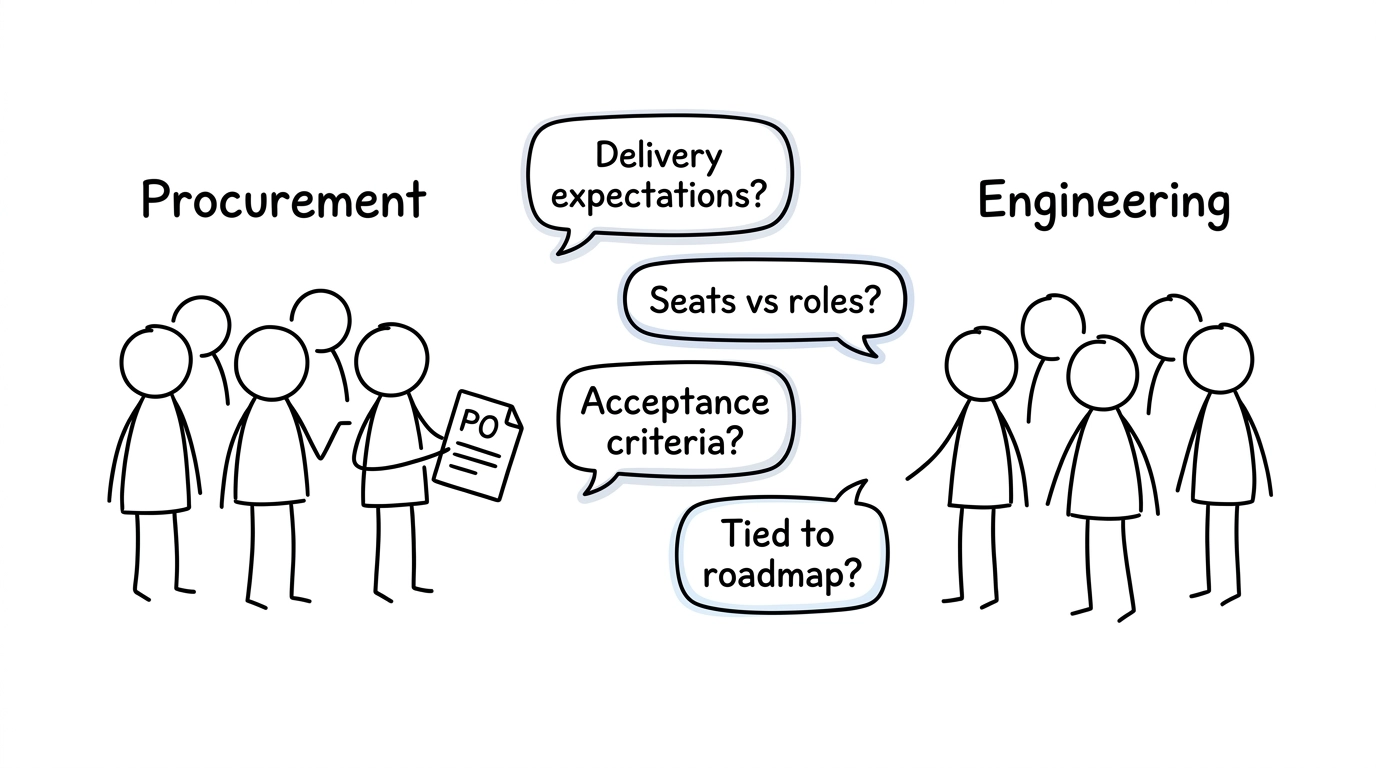 Fig 1: After tools hit procurement—expectations, seats/roles, acceptance narrative, budget linkage.
In short: AI software development isn’t “we bought tools.” Align the four post-PO questions so spend reads as investment, not a fine.
Want to run projects with AI and skip the trial-and-error? Uranus Lab wires multiple tools along requirements → docs → development → retro, with people and AI working together for smooth, fast delivery. Learn more or book a discovery call / get a free quote.
Ready to Build?
Stop building AI wrappers. Build defensible IP with a dedicated engineering pod.